SloEnduro Nova Gorica 2026
Reconnecting with SloEnduro family.
Nova Gorica opened the enduro season with the kind of first round that tells the truth quickly: familiar terrain, six stages, dry and dusty lines for most of the day, and rain changing the final stage right at the end.
The official result was 27th in M1 with 22:26.15 of combined stage time. More importantly, it was the first proper check after the winter break and a clear reminder of what is already back and what still needs more work.
Official classification
Official timing across all six stages
Full Sunday total
Sunday racing after Saturday recon
Opening note
The first round felt familiar in the best way.
Nova Gorica works as an opener because it gives quick answers. The terrain is honest, the stages are long enough to expose weaknesses, and the people around the event make the whole weekend feel warmer than a plain results sheet ever could.
That is really the feeling I want the page to keep: not just that the race happened, but that the season started with familiar trails, familiar faces, and a good reason to keep building from here.
Training day
The weekend started with a familiar drive and a short, controlled recon.
The opening move was simple: a 2.5 hour drive to Solkan, number pickup, and a steady recon of all six stages.
Because I had already trained here during the winter, the terrain was not new, but the dry and dusty surface still asked for a quick reset before race day.
Race-day atmosphere
SloEnduro still feels like a race series with a real social center.
Sunday started quietly with breakfast, the paddock, and the kind of easy routine that helps the first race of the year settle down.
The best part was seeing people again after the off-season. After a few years in the series, that part of SloEnduro really does feel like reconnecting with family.
I was also racing with Mario on his first full-course race, which gave the day a second storyline beyond my own result.
Form check
The hand felt solid again, and the team context made the result easier to read.
The biggest personal check was the hand. On that front the weekend was a clear positive, because it stayed solid from start to finish.
Racing with Mario also made the day easier to read. On his first full-course race we still matched times on two longer stages, which says something good about both the shared training and the pace.
Officially the day ended with 27th in M1 and 22:26.15 of combined stage time. For an opening race, that is a fair marker and a good place to restart from.
Final stage weather shift
Rain turned the last stage into a different race right at the end.
The final stage changed when the rain arrived. After a full day of dust and predictable slide, grip disappeared quickly and the trail asked for a different kind of trust.
It was the sharpest reminder of how fast conditions can move in enduro. By then the priority was staying composed, staying upright, and not donating time through panic.
I got through it clean, which mattered more than style at that point of the day.
Season outlook
The first race is done. What comes next is less certain.
Nova Gorica did its job as the first race of the season: it gave me a real effort, a real result, and a much clearer picture of what needs work.
The harder part now is the calendar. There is still uncertainty around the future Slovenian cup rounds, so the next steps are not fully clear yet.
If that uncertainty stays in place, Italian cup races may become the more practical option. Either way, this was the right weekend to start from.
Race run
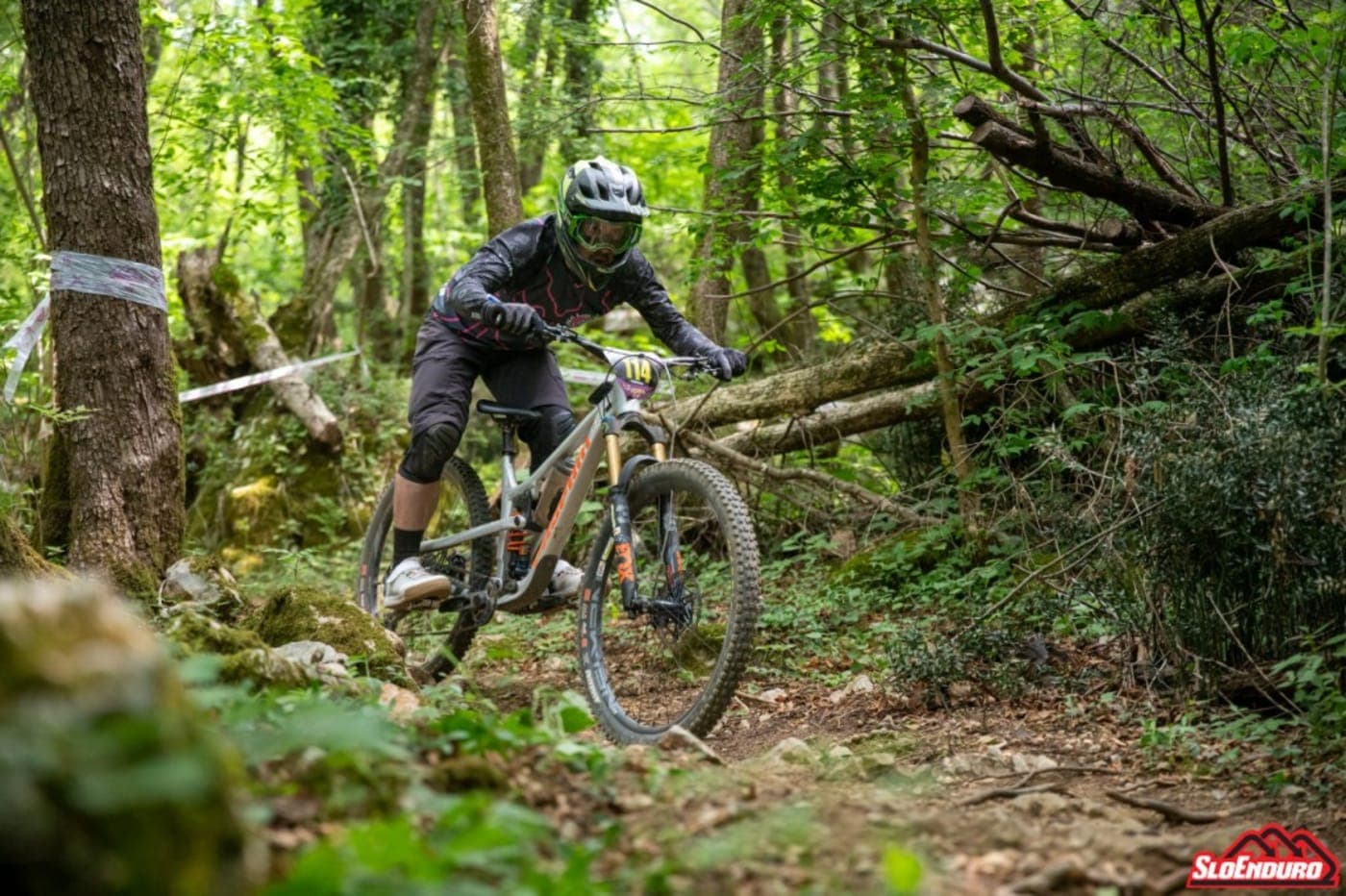
One proper photo from inside the timed effort.
This is the kind of image that adds something different from the phone shots around the paddock and transfers. It places the report back inside the race run itself: body position, trail speed, dust, and the focus that is hard to describe afterwards.
GPX route distance for the full day
Transfers and linking terrain included
Intervals.icu race-day load
Full bike time across the race day
Race route
GPX map and elevation profile for the full race day.
This view comes from the Garmin GPX file from race day, which is a much better fit for the page than a zone chart that does not really say anything useful about enduro itself. The route map shows the day’s direction, while the profile makes the transfer load easy to understand at a glance.
On mobile especially, this part should do the practical work fast: where the day moved, how much it climbed, and why the route itself shaped the race even before the timed stages are considered one by one.